Home › Services › Burning Smell From an Outlet
Switch the circuit off at the panel and stop using it. That is the whole of the immediate advice, and everything below explains why it is worth following before anything else.
And if the smell is fishy rather than smoky, treat it the same way. The flame-retardant plastics used in receptacles, switches and breakers give off a distinctly fishy odor as they overheat. It is a recognized sign, not a coincidence.
This is the part worth understanding, because it explains why a house can smell like this while the panel looks perfectly normal.
An ordinary breaker protects against two things: too much current (overload) and a direct fault (short circuit). It does not protect against a connection that has become loose and resistive. A poor termination can sit there heating up while the current through it stays comfortably within the breaker's rating — so the breaker has no reason to act, and the heat goes into the plastic and the box instead.
Arc-fault protection is the device designed to notice that signature. Most Sugar Land houses built before January 1, 2002 have none, which is the great majority of the city's housing. See GFCI, AFCI and code compliance.
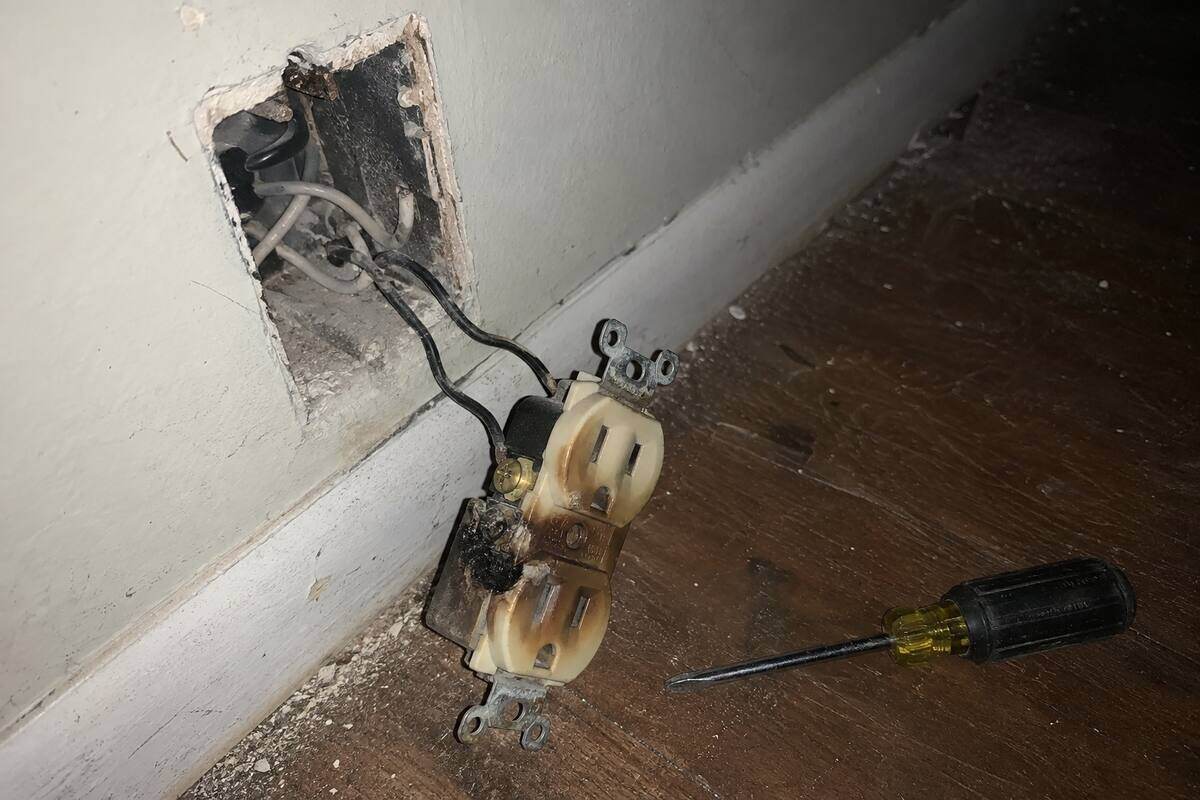
Push-in terminals were standard in tract construction. Decades of load cycling loosen the spring contact, and a loose contact carrying current is a heat source. See outlets, switches and fixtures.
In a house from the 1965 to mid-1970s window this is the first thing to suspect, because heating at the termination is precisely the documented failure mode. See aluminum wiring remediation.
A space heater, a window unit, a compressor. The device may simply be worn past the point where its contacts grip.
Kitchens and garages in 1970s and 80s Sugar Land houses were wired for a very different set of appliances than they now carry.
Unplug what is in it if the faceplate is not hot, switch that circuit off at the panel, and stop using it. Do not open the device. If there is smoke, flame or heavy scorching, leave and call 911.
Overheating flame-retardant plastic. It is a well-known indicator among electricians, and it means the same thing a burning smell means.
Because a standard breaker watches for overload and short circuit, not for a loose, resistive connection. Current can stay within rating while a bad termination chars the box. Arc-fault protection is what catches it, and pre-2002 houses do not have it.
The scorched device is usually the symptom, not the cause. A new device fitted to a heat-damaged conductor, or into a charred box, will do the same thing again. And in a house inside the aluminum wiring window, the termination method itself is the question — which is licensed work.
Say which room it is, what was plugged in, and the year the house was built. Getting connected with an independent, TDLR-licensed Fort Bend County electrician takes one call.
Call (346) 279-0855 Request a Quote Sugar Land