Home › Services › Lighting & Recessed Lighting
Lighting is the most visible electrical work in a house and the easiest to get subtly wrong — wrong housing for the insulation, wrong dimmer for the lamps, wrong color temperature for the room. Get connected with an independent, TDLR-licensed electrician working in Sugar Land and Fort Bend County.
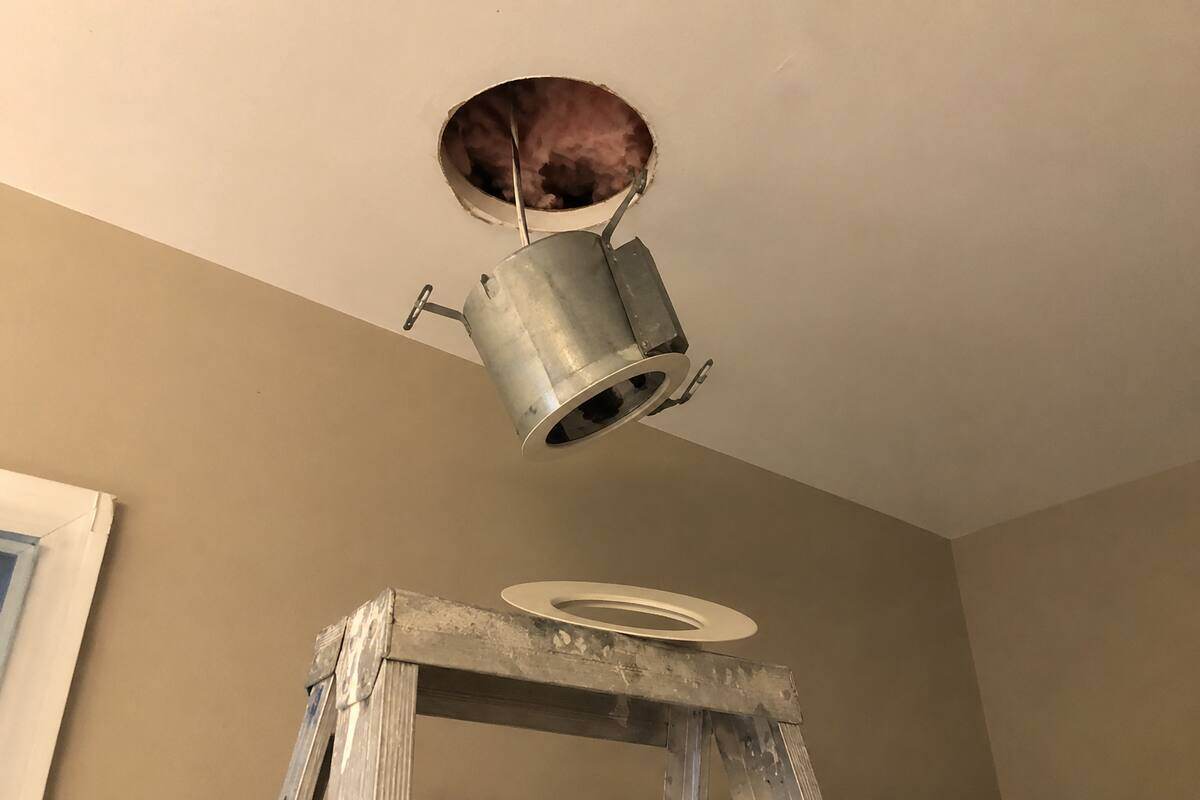
The detail that matters most here is insulation contact rating. A recessed housing marked IC may be buried in insulation; a non-IC housing must be kept clear of it by the required distance. Sugar Land attics are blown-in insulated, and insulation moves — it gets walked through, it gets redistributed when the air handler is serviced, and it settles. A non-IC housing installed correctly in 2004 can be covered by 2026.
The second detail is air sealing. Every recessed housing is a hole between a conditioned room and an attic that runs punishingly hot in summer. Airtight-rated housings exist for exactly this reason, and in this climate they are not a premium option so much as the sensible default.
The third is simply what is up there already: joists, ductwork, the air handler and its condensate lines, and the branch wiring. Where recessed lights can go in a Sugar Land ceiling is decided in the attic, not on the floor plan.
Replacing an old housing with a modern retrofit trim or a canless unit through the existing hole. Fast, and the usual answer for a 1990s house full of six-inch cans.
Old dimmers expect an incandescent load. A handful of LED lamps does not reach the minimum, which is where flicker, buzz and dead zones come from. An LED-rated dimmer matched to the fixtures resolves most of it.
Low profile runs, driver placement and switching that does not mean reaching behind an appliance. Often paired with a kitchen circuit that is being brought to current code anyway.
Soffit lighting, driveway and path fixtures, transformers and ground-fault protected exterior circuits. Rain, irrigation and clay soil movement are what break these installations here, not the fixtures.
A ceiling fan hung from a box rated only for a light fixture is a common finding in 1980s and 90s houses. See outlets, switches and fixtures.
Mixing 2700K and 4000K lamps across one open-plan room is the most common complaint after an otherwise good install. Worth deciding deliberately before anything is ordered.
Because that dimmer was built for an incandescent load and needs a minimum wattage a few LED lamps never reach. The result is flicker, an audible buzz, or a dead zone at the bottom of the dial. An LED-rated dimmer matched to the specific lamps usually resolves it, and lamp brand matters more than people expect.
Insulation contact — whether the housing may be in direct contact with insulation. Every Sugar Land attic is blown-in insulated and that insulation moves over time, so a non-IC housing that was clear when installed may not be now. It is a heat question inside a ceiling, which is the worst place to have one.
Usually. Remodel housings and canless LED units go in through a hole cut from below, with the cable run above in the attic. What limits the layout is joist spacing and whatever the ductwork and air handler are occupying, which is why the positions get confirmed from the attic rather than from the room.
The low-voltage fixtures are simple; the line-voltage transformer, the exterior circuit and its ground-fault protection are electrical work. In a market with this much rainfall and this much irrigation, the buried run and the connections are what fail — not the fixtures.
Tell us the rooms, the age of the house and whether the attic above is accessible. Getting connected with an independent, TDLR-licensed Fort Bend County electrician takes one call.
Call (346) 279-0855 Request a Quote Sugar Land