Home › Services › Aluminum Wiring Remediation
Aluminum branch-circuit wiring is one of the few electrical questions with a genuinely narrow, documented date range — which means the year your house was built answers it before anyone opens a wall. Get connected with an independent, TDLR-licensed electrician working in Sugar Land and Fort Bend County.
Per CPSC Publication 516, small-gauge aluminum branch-circuit wiring was installed in homes from about 1965 to the mid-1970s. Homes built before 1965 are unlikely to have it. Homes built after the window essentially never do — the industry moved back to copper for branch circuits and did not return.
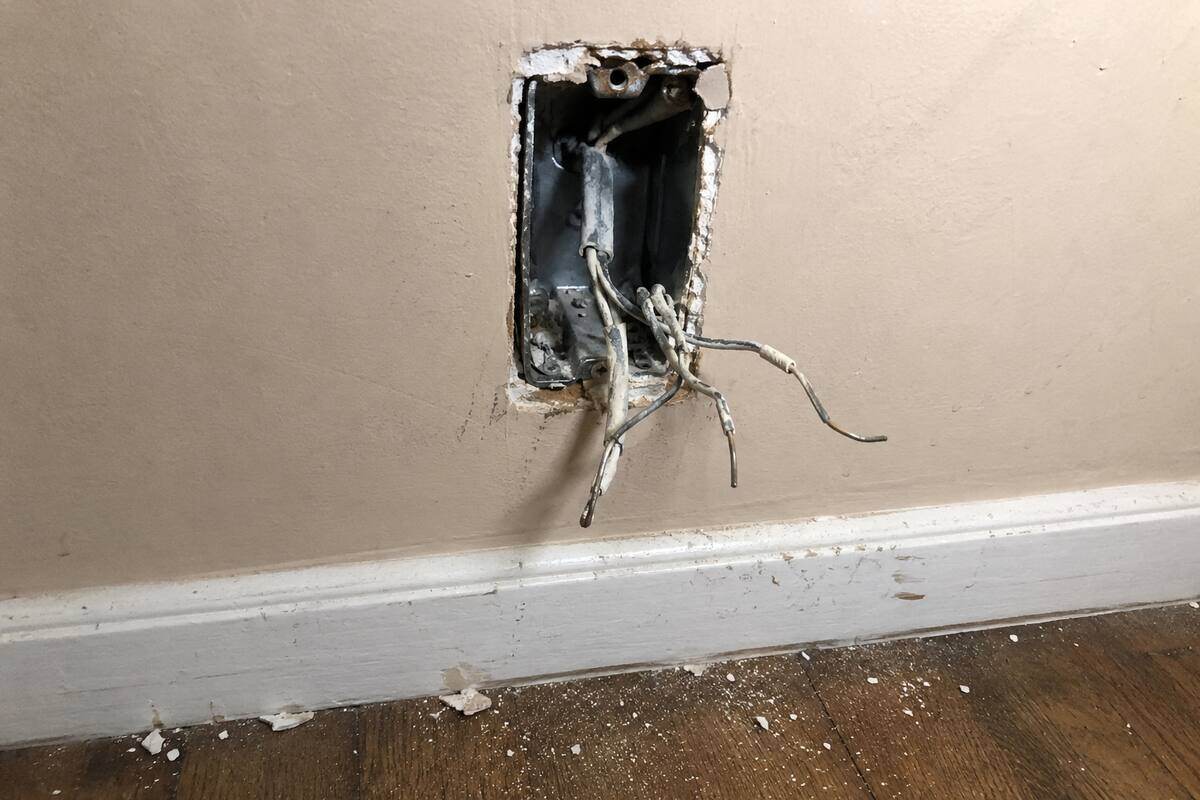
The mechanism is not that aluminum is a poor conductor. It is what happens at the terminations. Aluminum expands and contracts more than copper under load cycling, it is softer, and its oxide layer is not conductive the way copper's is. Over decades that produces loose, high-resistance connections at receptacles, switches and splices — and a high-resistance connection carrying current is a heat source inside a wall box.
This is the part almost every template site in this market gets wrong, and it is checkable against the appraisal district record for any address.
The later sections of Venetian Estates, the first Sugar Creek phases (1972–75), and the earliest of Covington Woods. These are the addresses where the question is genuinely live.
First Colony misses it completely — construction did not begin until 1977. So do Commonwealth, New Territory, Greatwood, Avalon, Telfair, Riverstone and Sienna. Most of Sugar Mill (1979–93) is past it too.
If a contractor raises aluminum branch wiring on a 1990s New Territory house, that is a template talking, not a diagnosis. A home inspector or a competing bidder will notice, and it is the fastest way to lose confidence in everything else on the page.
This is the most useful paragraph on the page, because it is where cheap quotes and real ones separate.
Accepted: complete rewiring in copper; COPALUM crimp connectors, applied with the manufacturer's tooling by a trained installer; and AlumiConn connectors.
Explicitly not accepted as permanent repairs: ordinary twist-on wire connectors — wire nuts, including the purple ones marketed for aluminum-to-copper — and CO/ALR-rated devices. CO/ALR receptacles and switches were once the standard advice; CPSC no longer treats swapping them in as a permanent fix.
So a quote that reads "pigtail all aluminum connections with connectors" is quoting something CPSC does not recognize as a permanent repair. It may still be cheaper than the alternatives. It is not the same product, and the difference is worth knowing before you compare prices.
Whole-house rewiring in copper is the definitive answer and the most expensive one — see whole-home rewiring, where Houston pricing typically runs $8,000 to $15,000. Connector-based remediation at every device is the middle path, and it is priced per termination rather than per house, so the count matters more than the square footage.
Roughly 1965 to the mid-1970s, per CPSC Publication 516, with homes built before 1965 unlikely to have it. In Sugar Land that is a small and identifiable set of addresses, not a general 1970s-house assumption.
No. CPSC accepts complete rewiring, COPALUM crimps or AlumiConn connectors, and explicitly does not accept ordinary twist-on connectors or CO/ALR devices as permanent repairs. If you remember one sentence from this page, that is the one.
No. Aluminum service entrance and feeder conductors are large-gauge, are still installed routinely today, and are not a defect. The concern is specifically the small-gauge aluminum branch-circuit wiring that feeds receptacles, switches and fixtures. Confusing the two causes a lot of unnecessary alarm at closing tables.
Some carriers ask about aluminum branch wiring on a homeowners application, and practice on pricing and acceptance varies. It is a question for your agent rather than an electrician — but what the conversation usually turns on is documentation that an accepted remediation method was used, which is another reason the CPSC list above matters.
If the house is outside the window this is a short conversation, and that is a good outcome. Getting connected with an independent, TDLR-licensed Fort Bend County electrician takes one call.
Call (346) 279-0855 Request a Quote Sugar Land